Showing posts with label Technology. Show all posts

Saturday, February 17, 2018

Some guys in the United States is mad as heck at Microsoft. He really really hates Windows 10 and doesn’t want anything to do with it. And to get his old Windows 7 back, he’s prepared to go the distance.


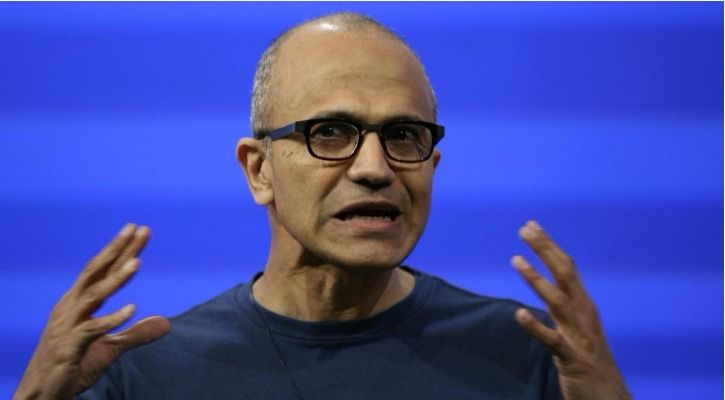
Frank Dickman Jr, from Albuquerque, New Mexico, filed a lawsuit on Wednesday, accusing both Microsoft and its CEO Satya Nadella of “civil rights violations”. To clarify, he’s seeking compensation from both parties for infringing his rights when his Asus laptop automatically updated from Windows 7 to Windows 10.

And Dickman is very clear on what he wants out of the lawsuit. He’s demanding either $600 million, or a new copy of Windows 7.


According to the complaint, Dickman’s troubles began with his Asus 54L notebook, which shipped with Windows 7. He says the laptop automatically updated to Windows 10 and “became non-functional immediately”, whatever that means. Now, he’s demanding Microsoft provide him a digital download of Windows 7 along with an activation code. Failing that, he wants a crap ton of money from, the company, and he’s given Microsoft 30 days to make its decision.

“The only sensible remedy is for Microsoft Corporation to supply the OEM version of its operating system by download from its website and confirmed by the key code which came with the computer,” the lawsuit reads.


REUTERS

This is quite a zealous bit of litigation that’s probably not going to gain any traction in court. However, it makes Dickman’s feelings on the matter clear, and he’s certainly not alone. People all across the world have been annoyed by Microsoft’s forceful Windows 10 upgrade drive that was carried out just before it launched.

In fact, according to some reports, most people have preferred to stay with Windows 7 rather than upgrade, despite the OS being eight years old and less than two years away from its support ending.

Source Link

This Windows 7 User Wants Microsoft To Pay Him Rs 3834 Crore For Upgrading It To Window 10

Monday, February 12, 2018

Korea will show off its tech prowess with high-speed networks beaming real-time video and VR straight from athletes to spectators.
The world-record speed for a bobsled is 125 mph. Whether or not any teams beat that during the Winter Olympics in Korea, they will collectively set a different speed record: for beaming data from a bobsled to a cell tower, at several gigabits per second. Bobsledding is one of the sports, along with figure skating, that wireless provider KT Corporation (formerly Korea Telecom) will use to highlight 5G wireless technology. Intel and Samsung will provide tech for many of the demos, which the lucky few attending the games will get to see.

“The Olympics is a showcase for the types of things that are probably going to roll out earlier in South Korea maybe than anywhere else, given that they frequently are on the leading edge of the next iteration of cellular technology,” says Gartner analyst Bill Menezes. Rival carriers SK Telecom and LG U+ will also be showing off 5G, but KT has talked more about what it has planned for the games.

The 5G technology standard was just finalized in December. All three Korean carriers aim to deploy it in 2019, at least to some extent. Networks specially built for the Korean carriers in the Olympic towns of Pyeongchang and Gangneung will demonstrate what’s possible. (U.S. carriers are shooting for broad rollout in 2020.)

5G provides far more bandwidth than anyone needs for checking email—a bad idea anyway, if you’re a bobsledder in the middle of a race. The tech companies will instead highlight what 5G is really good for: beaming video (at HD-and-above resolutions) and VR in close to real time. The delay in transmitting 5G streams can be as low as 1 millisecond—much less than a human can notice. Attendees will be able to watch live feeds from bobsledders’ helmet-mounted cameras or switch between multiple cameras placed along the cross-country skiing route to follow races, for instance, using Samsung 5G-equipped tablets. (The technology will require a whole new generation of compatible smartphones, tablets, and other gadgets.)

Maybe the coolest display will be a technology called TimeSlice, which uses about 100 cameras, arranged in a 180-degree arc in the Ice Arena. The footage is combined to create three-dimensional videos and freeze-frames of figure skaters that viewers can rotate around, a bit like watching Neo dodge bullets in The Matrix. Here’s a demonstration from another sporting event:

5G-equipped cameras will also capture VR footage from the Ice Arena and from cross-country races. Those streams will be beamed to 5G-equipped Intel VR headsets at the Olympics. For those of us who aren’t at the Olympics and will have to wait for 5G, NBC and Intel are also providing an app for VR viewing of over three-dozen events in skiing, curling, skeleton, and more.

ABOUT THE AUTHOR
Sean Captain is a technology journalist and editor. Follow him on Twitter @seancaptain.More
Source Link

The Winter Olympics Will Be A Coming-Out Party For 5G Wireless

Tuesday, February 6, 2018

Using a prototype 5G tablet from Samsung, Verizon and KT have announced completing a 5G video call between Seoul and Minneapolis.

Verizon has announced the success of a 5G video call alongside Samsung and KT using Samsung's first 5G tablet prototype, which enables multi-gigabit per second speeds.

The companies tested a live video call between Minneapolis and Seoul using a 5G test network with Samsung's 28GHz 5G access units, 5G home routers, virtualised Radio Access Units (RAN), and virtualised core network at both ends.

"Samsung has leveraged in-house technology and assets to develop the first commercial ASIC-based 5G modems and mmWave RFICs, and with these technical advancements, Samsung has been able to bring one of the smallest 5G radio base stations and 5G home routers to market," the company said.

The prototype tablet not only uses 5G networks, but is also able to complete handovers between 4G and 5G thanks to its chipset and antenna technology, Samsung said.

"By working closely with industry leaders like KT and Samsung, we are finally making 5G a reality," Verizon SVP and chief technology architect Ed Chan said.
"Seeing Samsung's 5G end-to-end solutions in action, including a working prototype 5G tablet, underscores how important our collaborative relationship has been in helping accelerate the availability of commercial 5G mobility for customers."

The trial took place in Minneapolis, where Verizon had boosted its LTE network ahead of the Super Bowl by adding 24 new cell sites and more than 200 small cell sites to increase the density of its network.

Verizon had also installed 48 percent more antennas to its distributed antenna systems (DAS) at US Bank Stadium, and deployed neutral host DAS systems at the Mall of America and Minneapolis-Saint Paul International Airport to boost network capacity by 900 percent and 1,000 percent, respectively.

"We installed more than 230 small cells in Minneapolis-Saint Paul and increased our network capacity by five-fold," Verizon's VP of West Network and Super Bowl network architect Brian Mecum told ZDNet.

"On top of that, we have upgraded DAS systems at other venues throughout the metro area ... small cells are important because when a million people are attending the 10 days of events leading up to the game itself, you need to add network capacity closer to where demand by smartphone-toting fans is greatest on the network."

It also deployed LTE-Advanced technologies including 4x4 Multiple-Input Multiple-Output (4x4 MIMO), 256 Quadrature Amplitude Moderation (256 QAM), and three-carrier aggregation in Minneapolis-Saint Paul, adding that it would be "the first provider out of the gate" to bring actual 5G to market in the US.

Verizon had last month announced choosing Samsung to provide the routers and 5G RAN for its initial 5G rollout, which will begin in Sacramento, California, in the second half of 2018.

This followed Verizon announcing in December that Swedish networking giant Ericsson would be rolling out its 5G networks in 2018, providing pre-standardised 3GPP technology "in select markets".

After announcing an accelerated 5G launch in October, Verizon and Ericsson will begin deploying the networks in the second half of 2018 using Ericsson's 5G core network, 5G RAN, transport services, and associated solutions.

Ericsson had already been helping Verizon to upgrade its 4G LTE networks, with the two deploying Massive MIMO technology across its wireless network in Irvine, California in October.

In June, Verizon had told ZDNet that one of the "key" parts of 5G is interoperability, with the carrier working not only with Ericsson and Samsung but also with Cisco, Intel, LG, and Nokia to roll out its pre-commercial 5G trial networks across the US last year.

Verizon and Samsung demo 5G call with KT

Monday, February 5, 2018


Jean-Marc Liduena, Senior Partner and Leader of Consumer & Industrial Products at Deloitte (INSEAD MBA ‘99J) | February 5, 2018

Successful digital disrupters are good at solving bread-and-butter problems, attracting staff and staying nimble.

For all its technological advancement, Southeast Asia has only recently taken to e-commerce. Thanks to the entrance of RedMart, an online grocer in Singapore founded by INSEAD alums, and Lazada (which recently bought RedMart), an e-commerce giant owned by Alibaba, Southeast Asians are changing the way they shop. Shipping speeds are starting to catch up with the American norm of same-day delivery. Consumers are also getting better service by the day. Zalora, a pan-Asian online clothing giant, lets customers return anything without any charge or hassle through the postal service. The region is becoming so hot that Amazon has entered the Singapore market, delivering diapers and beer at two hours’ notice.

How the digital organisations of the region are getting there, though, is with tenacity that transcends clever platforms and flashy new technology. While those are crucial ingredients, digital disrupters in Southeast Asia have to take on the same bread-and-butter challenges that plague delivery businesses throughout the world.

Shouldering the burden

At the recent INSEAD Alumni Forum Europe in Paris, Max Bittner, the CEO of Lazada, explained how the company thinks about the logistics challenge in Southeast Asia. “Because of the complexity of delivering large, small, and odd sized parcels like a couch, a watch or a shower curtain rod to say an HDB [public housing] in Singapore, a house in a village in Sulawesi or a home in a jungle in Thailand, we have partnered with more than 80 logistics companies whose specialties cover all of our needs. However, early on, we realised that we still needed to invest in building our first- and last-mile infrastructure to complement these partners. As a result, we now have the biggest logistics company in Asia, ensuring our supply chain is the best in the region,” Bittner said.

His comments reflected a growing need for capabilities in solving ordinary business challenges among digital players: "We are really building one-stop shop e-commerce, not just for consumers, but also for suppliers by trying to take away the complexities they face in the markets. In the past, the fragmentation of Southeast Asia, resulting not only from country borders but also diverse cultures, languages and remote locations, has made it less attractive for brands due to the complexity in understanding consumer behaviour and costs of doing business. Lazada has provided a simplified end-to-end platform for brands to access the region's six core markets regardless of their existing offline footprint in these markets. We are putting everyone on a level playing field. That is a core pillar of what we're trying to achieve."

An issue of talent

Disruption and digital transformation are not solely an issue for unicorns like Lazada. Established companies must also reassess their digital readiness. Regardless of company age or size, talent acquisition and retention are paramount for transformation. Mark Dixon, Christel Heydemann and Frédéric Mazzella, the other forum panellists, agreed with Bittner that the best way to effect change is with new eyes.

Dixon, CEO and founder of Regus, the multinational office space provider, explained how his company approaches outsourcing: “The answer to a lot of the software problems we have is Ukraine, Hungary and Romania. There are lots of programmers there; they can do things in a fraction of the time, fraction of the cost.”

“Outsourcing, an alliance of partners, good communication with those partners to say here's our common goal” adds to greater success for Regus, he continued.

Schneider Electric, the French multinational, has another issue facing established players: bringing in new skills while securing the competence of an ageing workforce.

“In France,” Heydemann, CEO of Schneider Electric France, said, “more than 2,000 people will retire in the next five years.” Replacing the skills, the technical expertise that has been built up over 30 years is one hurdle they face. But Schneider Electric, like all companies, also has to attract new workers: “Our biggest challenge is to attract and retain young talent.” Schneider has a digital service factory, which is more agile and “more like where these new generations would want to work. But the challenge is that we also need to bring those talents in the core of what we do.”

The newcomers aren’t necessarily outsourcers nor do they have the problem of imminent retirees. A common thread is the outlook of employees in the face of disruption.

Bittner said there are two central factors about tech talent: Accept a lack of perfection and create a sense of paranoia in them. On tech talent “there is no way you can say ‘I want a data scientist who specialises in exactly the process I want to optimise’. It's more about creating a culture of hiring very young people and then giving them the freedom to express themselves and shine,” he said.

Regarding “paranoia”, Bittner described how disruption in the technology industry is not a one-time event. Over the six years Lazada has been in business, it’s been disrupted itself any number of times. Keeping all employees paranoid about the competition, on their toes and ready to face any challenges is key for Lazada.

At BlaBlaCar, founder Mazzella reported that “what's really important is that you have a mindset, a culture that is agile and that can adapt, innovate.” At the Paris-based start-up, they take agile into the physical world: “No one in the company has had a desk for more than a year in the same place.” People may retain their job but move to a different desk, or they could change job and desk. Ensuring the company is an attractive place to work, with a focus on culture, also helps to attract and retain talent.

Disruptive agility

Solutions to the problem of disruption vary from company to company. Mindset, supply chains and business models have helped the panellists’ companies affect change. I referred to a report from Deloitte called “Navigating the New Digital Divide” which explained that there is no more gap, there is no more divide between real and digital life.

Bittner agreed, “The concept of offline vs. online is archaic. If you're online at a store or at home, it doesn't make a difference. We're not living in a world where you need to sit at home on a computer to be online. If I'm in a store and I'm looking at my phone, what am I? Offline, online? It's very hard to define.”

“The disruption here is less about my industry being disrupted. It's more about the digital players, which are the Alibabas and the Amazons of this world, bringing their expertise of using data and technology and tools to optimise the supply chains within a department store. Or understanding through their data who the consumers walking into the store are. Frankly, they should know who the customers are and what they want before the customers even enter the store,” based on information from WeChat and other apps.

Consumers share their opinions on WeChat or Facebook or they write app reviews to show what they need and how they prefer to get it. Digital transformation is the convergence of technology and data to optimise processes.

Dixon said, “We have to run our business like it's a start-up, like we were starting it tomorrow. So everything we do, make it digital. How we interact with customers, how we interact with our own people.”

“In order to adapt,” Mazzella added, “you have to go back to the strengths of your roots.” For BlaBlaCar, these roots are the ability to go anywhere at a low cost with the help of a large community. This is a reflection of the core of the company.

The importance of supply chains – perhaps not the first thing that springs to mind when discussing digital transformation – shone through during the panel.

At Schneider, “our biggest strength is obviously our supply chain, that’s number one,” according to Heydemann. “We are one of the top 20 companies for supply chains. Number two is our network of partners. We have a strong industrial software business with 4,000 integrators around the world.”

In the digital age, “the biggest change is obviously that we can connect and know better our customers and our partners. And we should serve them better using digital technology, connecting them through the web, providing all the technology available in the digital space,” she said.

For Heydemann, a unique opportunity is the role of energy storage and renewable energy. “The world of energy is becoming digital decarbonised and decentralised. Everyone today is an energy consumer, everyone tomorrow can be an energy producer, with solutions combining solar and storage. The biggest revolution that's coming to Schneider Electric is energy storage and decentralisation of how energy is consumed and produced.”

“Digital is, of course, a fantastic driver for change,” Bittner said in his closing remarks, but “don't be too scared of us. We have the same problems with teams and motivation and incentivisation that everyone has.”
BLOG Digital Winners Transcend Technology

Sunday, January 28, 2018

A new thermal spray coating technology used for gas turbine engine in spacecrafts developed by a Rajasthan-based researcher has caught the attention of a NASA scientist, an official said. Expressing his interest in the research, James L Smialek, a scientist from NASA wrote to Dr Satish Tailor after it was published in the journal Ceramics International and Thermal Spray Bulletin, said SC Modi, the chairman of a Jodhpur-based Metallizing Equipment Company (MEC). While working at MEC as a chief scientist, Research and Development, (R&D), Dr Tailor developed the controlled segmented Yttria Stabilised Zirconia (YSZ)-Plasma sprayed coating technology, which according to him could reduce the thermal spray coating cost by almost 50 per cent. “In simple language, vertical cracks (segmentation) in the coating are beneficial for gas turbine engine application used in spacecrafts,” Dr Tailor said.

“At present, researchers are developing such cracks through very expensive processes (in several crore) and cracks are generated during the coating deposition process, and crack generation is not controllable,” he told PTI. He said he has shared his research papers with the NASA scientist who had written him an email regarding this. Scientists working at the country’s leading research organisations – the Council of Scientific and Industrial Research (CSIR) and Defence Research Development Organisation (DRDO)- are equally impressed with the new technology.

Dr RM Mohanty, the chief scientist at the CSIR headquarters in New Delhi, said that indeed the outcome of the reported R&D presents an inexpensive solution for superior survival of current YSZ thermal barrier coatings produced by atmospheric plasma sprayed (APS) technique, and has a potential of wider industrial/strategic acceptability. Mohanty said this novel APS linked process has an advantage over current, costly techniques such as SPS or EB-PVD deposited coatings which came into picture gradually, as the reported advantage in the research was not possible with convectional APS techniques.

He said the innovators should patent the process/equipment or both internationally for bringing benefits to the APS based business. Another scientist at the DRDO, Dr RK Satpathy said the generation of vertical cracks holds great promise, if the research process can be industrially adopted in making a strain tolerant coating then it will definitely be more economical compared to its expensive counterparts techniques. Dr Tailor is the deputy editor-in-chief of the Journal of Materials Science and Surface Engineering, and chief editor of the Journal of Thermal Spray and Engineering.

He is associated with the National University of Science and Technology (NUST) in Russia as a visiting young scientist. Hailing from Jaipur, Dr Tailor completed his PhD in metallurgical engineering with specialisation in plasma spray coatings from the Malaviya National Institute of Technology (MNIT), Jaipur. He has published over 25 national and international research papers in reputed journals on thermal spray technology.

Courtesy http://www.financialexpress.com

NASA shows interest in made in India technology for spacecrafts

Saturday, January 27, 2018

Speaking at the British Education Training and Technology Show 2018, Microsoft Vice-President of Education Anthony Salcito said it was time for schools to change the way they taught their students to better match the world outside the classroom.

“The way we think of students and the way they see themselves and their place in the world is fundamentally different,” Salcito said. “We often describe these students as ‘phygital’ – they don’t see the difference between the physical world and the digital world. They want to create, make and use digital tools in new ways.”

“The way students learn, share ideas, get access to content, create and collaborate is fundamentally different. Their mindsets are different, and the workplaces we are preparing them for are different, so we have to recognise there has been a lot of change. What we’ve now got to do at a system level, the institution level, is not only embrace that change but use it in a purposeful way to drive a different dynamic in classrooms.”

Microsoft is a major sponsor of BETT 2018, and have been focussing increasingly on schools and the classroom as their next enterprise market, releasing a number of tools and platforms designed specifically for that environment. This includes platforms like Windows 10 S, Office 365 for Education, Microsoft Teams for Education, HoloLens and even Minecraft for Education, and the effort appear to be paying off as Microsoft has been winning back market share in the field.

Salcito believed technology can “extend learning beyond the classroom” and will shake up the traditional educational model of a teacher standing in front of a class. Pupils will be able to work more closely together, on more projects and occasionally be in control of their own learning while at school.

“Technology is an amazing tool, and one of things it can do, which we have to harness, is the extension of learning beyond the classroom,” Salcito said. “Teachers can spend less time going through content chapter by chapter – chapter one, chapter two, test, chapter three, chapter four, test – and leverage this world of digital content and learning from others, learning by connecting students to work on projects outside the classroom. What does that mean for how people work inside the classroom? It means they can connect students, who can work on problem-solving and new projects. They can have flip classrooms where students are in the driving seat.”

Salcito said schools needed more “amazing teachers” that could influence a school student in the classroom but really guide their learning journey outside it.

“The size of the learning world for teachers has got bigger,” he noted.

He believed the new approach to teaching will prepare children for a world of work in which people will no longer move to find work, as technology will bring jobs to them.

“There is no shortage of talent in the world, it’s a matter of opportunity. We’ve got to bring that opportunity, with technology, to every classroom.”

The BETT 2018 conference is currently running at the ExCel centre in London. 

Ref: mspoweruser.com

Microsoft Demand Teachers bring more Technology into the Classroom

Friday, January 26, 2018

Dell Technologies is considering strategic options including a public stock offering, according to people familiar with the matter, as the corporate-technology company seeks ways to boost revenue and raise funds.

The board is meeting later this month and will discuss its options, said the people, who asked not to be identified because the talks are private. Round Rock, Texas-based Dell may also decide not to make any such moves at this time, the people said.

Founder and Chief Executive Officer Michael Dell took his company private in 2013, when he teamed up with Silver Lake Management LLC on a leveraged buyout. That freed Dell to cut costs and work to become a bigger supplier of hardware and software for corporate data centers without the quarterly investor scrutiny that comes with being a public company. Three years later, Dell acquired storage-technology provider EMC Corp. and its majority stake in data-center software vendor VMware, taking on a massive debt load to seal the $67 billion deal.

Raising cash could help the company further expand or pay off some of the debt. Dell Technologies has about $46 billion of debt, according to data compiled by Bloomberg. That includes about $3 billion of bonds maturing in 2018 and $4.35 billion due next year while the company also has loans outstanding, the data shows.

Another option is to buy the rest of VMware that Dell does not already own, said one person familiar with the matter. VMware shares have risen more than 60 percent in the past year.

Dell is also considering a public share sale for its Pivotal Software Inc. cloud-computing venture. Dell met with bankers last year to discuss that possibility and was told the company could fetch a valuation of $5 billion to $7 billion, said one of the people. Still, any Pivotal offering may wait until the company has converted more of its business into wider-margin software and subscriptions and away from less-profitable services businesses, the person said.

Pivotal, a cloud software and services firm, was once a joint venture of VMware, EMC and General Electric and became part of Dell after the EMC acquisition.

Dell and VMware couldn’t immediately be reached for comment.

Courtesy www.bloomberg.com

Dell Technologies Considering IPO, Other Options, Sources Say

Wednesday, January 24, 2018

A musician who made a 10-hour long video of continuous white noise - indistinct electronic hissing - has said five copyright infringement claims have been made against him.
Sebastian Tomczak, who is based in Australia, said he made the video in 2015 and uploaded it to YouTube.

The claimants accusing him of infringement include publishers of white noise intended for sleep therapy.

"I will be disputing these claims," he told the BBC.

Google automatically makes claims on behalf of content creators if its algorithms find a close match between the content of two videos.

In this case, the claims against Mr Tomczak do not demanding the video's removal, but instead the reward of any revenue made from advertising associated with it.

Without the claims, Mr Tomczak would receive such revenue himself.

"I am intrigued and perplexed that YouTube's automated Content ID system will pattern-match white noise with multiple claims," he said.

His video was originally made along with other 10-hour recordings - including one of a continuous electronic tone.

The claims relate to specific portions of similarly lengthy videos of white noise also posted on the site.

'Spurious' claims'

Mr Tomczak said the "spurious" claims won't have a significant impact on him, though he finds them "frustrating".

"If I were making substantial money from YouTube content, such a broken system may prove to be unusable," he said.

Similar cases have occurred before. In 2012, one YouTube user reported that he faced copyright claims over birdsong captured in the background of one of his videos.

On that occasion, a spokesman for the claimant in question said the claim was indeed made by YouTube's automated system.

The claim was soon removed.

"Copyright does not protect the idea, but the expression of the idea," explained intellectual property lawyer Iain Connor at UK law firm Pinsent Masons.

"If I record background white noise or if I have a random white noise generator and I record that, with me being the first person to fix that recording, then I am the owner of its copyright."

Although there may occasionally be spurious claims, Mr Connor said he thought the YouTube system offered reasonable protections to both content creators and copyright claimants.

"The only other option is to go through the courts so I think on balance it's probably as good as it can be," he said.

Fooled algorithm

A spokeswoman for Google, which owns YouTube, said that the Content ID system works by automatically matching uploaded content against sample files provided by other content creators.

A match could indicate that a work has been copied but clips of white noise are too indistinct for Google's algorithms to work accurately, the company confirmed.

"The accuracy of our matching systems can only ever be as good as the accuracy of what copyright holders submit," the spokeswoman said.

"We have review teams that work to catch and prevent inaccurate claims, take action against copyright holders who knowingly or repeatedly cause errors, and we offer a robust dispute process for users who believe their video was claimed in error."

According to Google, the rate of invalid claims is below 1%.

Ref: http://www.bbc.com

White noise video on YouTube hit by five copyright claims

Tuesday, January 23, 2018

Tech firms are working to fix two major bugs in computer chips that could allow hackers to steal sensitive data.
The bugs are an "absolute disaster" and need to be fixed promptly, according to one cyber-security researcher.

Google researchers said one of the "serious security flaws", dubbed "Spectre", was found in chips made by Intel, AMD and ARM.

The other, known as "Meltdown" affects Intel-made chips and one recent ARM chip.

The industry has been aware of the problem for months and hoped to solve it before details were made public.

The UK's National Cyber Security Centre (NCSC) said there was no evidence that the vulnerability had been exploited.

It has issued guidance about Meltdown and Spectre, including advice on what people can do to protect themselves.

According to the researchers who found the bugs, chips dating as far back as 1995 have been affected.

Some fixes, in the form of software updates known as patches, have been introduced or will be available in the next few days, said Intel, which provides chips to about 80% of desktop computers and 90% of laptops worldwide.

"These bugs are an absolute disaster," said Matthew Hickey, a cyber-security expert at Hacker House.

While some computers can be patched quickly, others faced a longer wait, he explained, giving virtual hosting systems as one example.

"You may find that patches aren't yet available," he told the BBC.

Microchips are the basic electronic systems behind many devices such as computers and mobile phones.

In order to do their work, they must move data around, using different types of memory to temporarily store it.

In many cases, that information is supposed to be secure from attempts to snoop on it, but these two bugs mean that it could in fact be accessed by a third party.

The first reports suggested that a bug affected solely chips made by Intel, but it has since emerged that a separate flaw, Spectre, has been found in Intel, ARM and AMD chips.

"Many types of computing devices - with many different vendors' processors and operating systems - are susceptible to these exploits," said Intel.

ARM said patches had already been shared with its customers, which include many smartphone manufacturers.

AMD said it believed there was "near zero risk to AMD products at this time".
Security updates

On a conference call for investors, Intel said researchers had shown that hackers could exploit the Meltdown vulnerability, gaining the ability to read memory and potentially access information such as passwords or encryption keys on devices.

Microsoft, which uses Intel chips said it would roll out security updates on Thursday, adding it had no information suggesting any data had been compromised.

Apple's latest macOS, version 10.13.2, is safe from the Meltdown bug and the firm is working on updates for earlier versions of the operating system on its laptops and desktops.

As for Spectre, however, experts believe that it will not be possible to patch it directly, but various software tweaks could help stop it being exploited.

Google published a blog detailing what some customers may need to do. It said Android phones with the latest security updates were protected, and that Gmail was safe. It will be releasing security patches for users of older Chromebooks, while there will also be a fix for users of the Chrome web browser.

The NCSC said it was aware of the reports of the potential flaw and advised that all organisations and home users "continue to protect their systems from threats by installing patches as soon as they become available."

When asked whether hackers will make use of the bugs to attack computers, experts advised caution on the issue.

"It is significant but whether it will be exploited widely is another matter," said Prof Alan Woodward, from the University of Surrey.

Reference http://www.bbc.com

Rush to fix 'serious' computer chip flaws

US research finds policy and politics could turn a technological fix into a climate disaster. Stephen Fleischfresser reports.
New research published in Nature Ecology & Evolution has come to the counterintuitive conclusion that attempts to fight climate change using technological remedies may well inflict greater damage to global biodiversity than global warming itself.

As anybody who has been watching recent American politics will know, political decision-making is often bewilderingly inconsistent, and this is true of all governments over a longer time scale. What seems like a good idea one day may become politically toxic the next, which means that the futures of all long-term projects are far from assured. They can be started at stopped rapidly or gradually, depending on political whim.

This could seriously affect international, large-scale, long-term projects to manipulate the Earth's natural system to fight global warming, a process called "geoengineering".

Geoengineering comes in two basic forms. The first attempts to remove human-made greenhouse gases, such as carbon dioxide, from the atmosphere and safely dispose of or store them out of harm's way. The second is "solar radiation management", which attempts to regulate the amount of the sun's energy reaching the surface.

The most likely method of implementing this second form of geoengineering, called stratospheric aerosol injection (SAI), involves the release of aerosols, mixtures of fine particles or liquids, in the very upper atmosphere in an attempt to reflect some of the sun's rays and thus help cool the planet.

A team of researchers led by Christopher Trisos of the National Socio-Environmental Synthesis Centre at the University of Maryland, US, has now modelled the effects of abrupt changes in potential long-term SAI geoengineering projects.

The scientists imagine a scenario in which SAI projects continue to 2070 and then are quickly halted due, most likely, to mercurial politics. Using a geoengineering climate model simulation called the Geoengineering Model Intercomparison Project, or GeoMIP, they found that such a quick change would reduce global biodiversity more than global warming itself would.

The reason for this is to do with the rate of climate change.

"As climate changes, the appropriate conditions necessary for the persistence of a species move across the Earth, driving species' geographic range movements in response to climate change," write the authors. "Indeed, species that fail to track moving climates may go extinct, despite suitable climate conditions being present elsewhere."

As long as climate change is gradual enough, then, species will have a chance to adapt.

The measure of the rate at which species-appropriate conditions move across the planet is dubbed "climate velocity". The GeoMIP model has predicted that these velocities are much higher in anthropogenic SAI projects than those projected for global warming, which means that species have much less time to adapt and will face higher rates of extinction because of it.

Interestingly, the team found that the effect of rapidly ending a long-term SAI project would be more calamitous than starting one, as climate velocities "at termination are most extreme in tropical oceans, the biodiversity-rich Amazon Basin, Africa, Eurasia and polar region".

Thus, while technology may have landed us in this predicament, it may not be able to get us out of it with biodiversity intact.

Reference cosmosmagazine.com

Geoengineering could cause more harm than climate change

A magnitude 8.2 earthquake off Alaska's Kodiak Island prompted a tsunami warning for a large swath of coastal Alaska and Canada's British Columbia while the remainder of the U.S. West Coast was under a watch.

The strong earthquake was recorded about 175 miles southeast of Kodiak Island early Tuesday morning. Warnings from the National Weather Service sent to cellphones in Alaska warned: "Emergency Alert. Tsunami danger on the coast. Go to high ground or move inland."

Kodiak officials warned residents to evacuate if they lived in low-lying areas.

People reported on social media that the quake was felt hundreds of miles away, in Anchorage.

Source http://abcnews.go.com

Alaska earthquake prompts tsunami warning

Melia Robinson, provided by
  • In-N-Out Burger pays its employees really well.
  • Store managers earn an average yearly salary of more than $160,000, more than what the typical tech worker in Silicon Valley makes for the year.
  • High wages for fast-food workers can lead to increased productivity, less employee turnover, and bigger profits in the long run.
There's a secret sauce to In-N-Out Burger's success. It pays employees really well.

The West Coast burger sensation pays store managers an average yearly salary of more than $160,000, which is about triple the industry average, according to the latest California Sun newsletter. There is no college degree or previous management experience required.

To put this into perspective, tech workers in Silicon Valley earn on average $114,654 for the year, according to a survey from hiring platform Dice.

"In-N-Out is just eons above everybody else," Saru Jayaraman, an advocate for restaurant workers in the Bay Area and director of the Food Labor Research Center at UC Berkeley, told California Sun's Mike McPhate. "On wages and benefits, they really are the best large chain."

Employees start at a higher-than-average salary of at least $13 an hour and have the opportunity to advance to six figures as a store manager. A typical architect in California makes about $112,000 a year, while a lawyer rakes in $117,000, according to jobs site Indeed.
The burger chain offers benefits including 401(k) plans, paid vacation, and dental and vision coverage for part- and full-time employees — a rarefied package in the fast-food industry. In a Glassdoor ranking of the best places to work in 2018, In-N-Out earned the No. 4 spot and beat out tech giants like Google and Microsoft. It was the only restaurant chain in the top 50.

Denny Warnick, vice president of operations at In-N-Out, told California Sun that paying employees well has always been part of the company culture.

In 1948, Harry and Esther Snyder opened the first In-N-Out in a Los Angeles suburb with quality service as a central focus. "Paying their associates well was just one way to help maintain that focus, and those beliefs remain firmly in place with us today," Warnick told California Sun.

It's not an act of charity, according to Jayaraman. Her research shows that paying employees well leads to better productivity, less employee turnover, and bigger profits.

In-N-Out is growing. The burger chain recently announced it's opening a distribution center in Colorado, which could allow it to expand beyond the West Coast. All stores must be located close to these hubs because of the company's strict policy of serving food fresh, not frozen.

Read detail article on http://www.sfgate.com

In-N-Out employees can work their way up to $160,000 a year with no degree or previous experience

PLEASE LIKE MY FACEBOOK PAGE

Please Wait 10 Seconds...!!!Skip
Do you like Technology News?

Labels